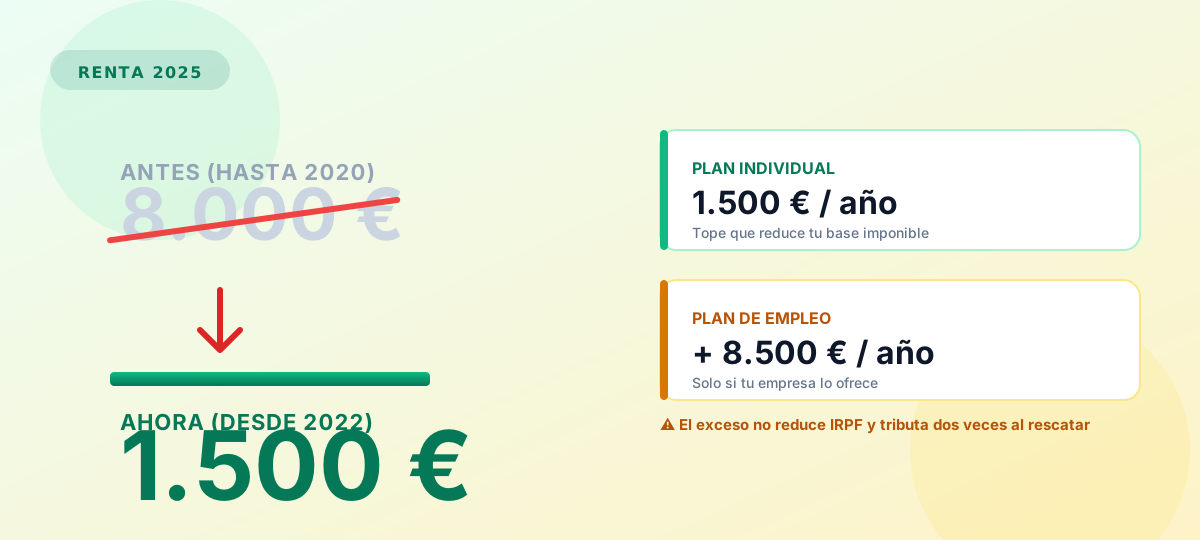
The cap for reducing income tax through individual pension plan contributions has been €1,500 for years now, but thousands of taxpayers keep contributing as if it were still 2021, when the limit was €8,000. Going over the cap doesn't just fail to save you tax — it can mean paying tax twice on the same money when you eventually withdraw the plan. Here's what to check before confirming your draft return on Renta Web.
The cap many people keep ignoring
The change isn't from this year, but its effect is still very much alive. From the 2022 tax year onwards, contributions to individual pension plans lost the historical €8,000 cap and dropped first to €2,000, and then to €1,500 a year. For the 2025 tax return, that's still the maximum that can reduce your general taxable base.
| Tax year | Individual plan cap |
|---|---|
| Up to 2020 | €8,000 |
| 2021 | €2,000 |
| 2022 onwards | €1,500 |
There's one specific exception: occupational pension plans (those funded by your employer) can add up to €8,500 extra, provided that the employer's contribution is at least equal to the worker's. Combining individual + occupational, the total can reach €10,000. Most taxpayers only have an individual plan and stay at the €1,500 limit.
Who is affected?
- Employees and self-employed workers with an individual pension plan at a bank or insurer.
- People who contribute by monthly direct debit and haven't reviewed the amount since 2021.
- Those who made extraordinary contributions in 2025 expecting to reduce IRPF beyond €1,500.
- Taxpayers with both individual and occupational plans who aren't clear on how the limits combine.
- Spouses contributing to each other's plans: the additional cap also dropped to €1,000 a year, conditional on the spouse not earning employment or business income of €8,000 or more.
What to do if you've gone over the cap
- Request your contribution certificate: the plan provider issues one each year with the total contributed in 2025. Compare it with the €1,500 cap (or with whichever applies if you have an occupational plan).
- If the total exceeds the cap, the excess doesn't reduce IRPF. If you leave it in the plan without correcting it, you'll be taxed again on that same money when you cash it in. This is the dreaded double taxation of excess contributions.
- You have two legal ways to avoid it:
- Request the refund of the excess from your plan provider before 30 June 2026 (Art. 6 of the Pension Plans and Funds Regulations, RD 304/2004). If withdrawn within that deadline, the 50% penalty set for the excess does not apply.
- Defer the deduction to the next 5 tax years by ticking that option on the return itself (Art. 52.2 IRPF Act). Useful if your 2025 general base wasn't enough to absorb the full contribution.
- Review your draft return: make sure the deduction applied matches your real contribution and doesn't exceed the cap. Renta Web does not warn you if you've gone over: it simply trims the deduction to the legal maximum and leaves the excess "trapped".
- If you have an occupational plan, ask your HR department for the breakdown of employer contributions for the year so you don't exceed the additional €8,500.
30 June 2026: the key date
If in 2025 you contributed above the cap, you have until the end of the campaign to ask your plan provider for a refund of the excess. After that date, the money stays trapped in the plan and you'll pay tax on it again when you withdraw it.
Individual plan vs. occupational plan
A lot of confusion comes from mixing up the two products. These are the 2025 caps in force:
| Product | Your cap | Employer cap | Total cap |
|---|---|---|---|
| Individual plan | €1,500 | — | €1,500 |
| Occupational plan | Up to matching employer | €8,500 | €10,000 combined |
| Spouse contribution | €1,000 extra | — | Spouse with income < €8,000 |
The occupational plan is only available if your employer offers it. It's not something you can take out independently at a bank.
Why the AEAT doesn't warn you
The AEAT loads your contribution data into the draft return, but it doesn't check whether you've exceeded the cap. It simply applies the legal limit to the deduction and leaves the difference "outside the deduction". It's the taxpayer's responsibility to identify the excess and decide how to handle it: refund through the provider or deferral to future years.
Key tip
Set a calendar reminder to review the previous year's contribution certificate every January. Spotting the excess in time lets you choose between a refund or a deferral — waiting until June cuts your options in half.
Background
The lower cap was introduced by Act 22/2021 on the General State Budget for 2022 (Spanish Official Gazette of 29 December 2021), which amended Art. 51 and Sixteenth Additional Provision of the IRPF Act. The aim was to boost occupational plans over individual ones. After the reform, contributions to individual plans have plummeted, but many taxpayers keep automatic direct debits set up before the change and haven't adjusted the amount. For a broader view of the campaign, see our guide on the key dates of the 2025 tax return.